On South Africa’s Wild Coast, where grasslands roll into rocky shorelines and rivers cut through deep gorges on their way to the sea, a new conservation story is taking shape. It starts with nine women.
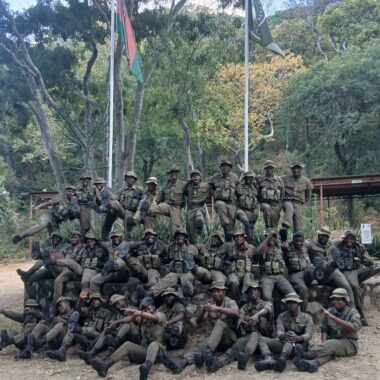
The Green Griffons, an all-women ranger team, patrol the coastline, wetlands, grasslands, and forests of the Mkambati Nature Reserve, one of the country’s most ecologically important protected areas. Still in its early stages, the project is already being seen as something significant: a community-rooted ranger unit inspired by the success of the Black Mambas, but shaped entirely by the realities of the Wild Coast.
For Dr Div de Villiers, who helped establish the project, the journey to this point has been decades in the making. “I’ve been involved in conservation for 45 years,” he says. “Much of that work has been on the Wild Coast.”
De Villiers previously headed up the environmental law enforcement unit known as the Green Scorpions in the Eastern Cape and has spent years working in and around Mkambati, including managing the reserve in the late 1990s. When he left government in 2023, he was approached by conservation tourism company Natural Selection to assist with conservation support in the northern concession of Mkambati.
The reserve itself has a complex history. Once taken from local communities during the establishment of a leper colony in the early 1900s, the land was successfully reclaimed through post-apartheid restitution. Today, it is owned by a community land trust and managed through a partnership model involving tourism, conservation, and community development. It was through this structure that the Green Griffons came to life. Named after the Cape vultures, also known as griffons, found in the reserve, the unit was established through the support of the Mkambati Community and Conservation Nonprofit Organisation, with funding assistance from German NGO AMES (Africa’s Most Endangered Species). Their role is not to replace existing field rangers but to strengthen conservation efforts on the ground. “There’s been a reduction in conservation budgets for years,” De Villiers explains. “Field rangers are under-resourced and underfunded. The Green Griffons are there as a support unit, working hand in glove with the existing rangers.”
The Green Griffons’ approach to anti-poaching is intentionally quite different. Where traditional units often operate covertly, the Green Griffons focus on visible patrols and prevention. Their presence is designed to deter illegal activity before it starts while also building relationships with surrounding communities. “They’ll be visible, approachable, knowledgeable,” says De Villiers. “The idea is to prevent poaching rather than react afterwards.”
Like the Black Mambas, the team is entirely female, but the landscape they operate in presents a very different challenge. “The Black Mambas work in Big Five areas,” De Villiers explains. “The Green Griffons operate on the coast. Their focus is largely coastal conservation.”
Conservation on the Wild Coast comes with its own complexities. Unlike many protected areas surrounded by private farmland, Mkambati sits within communal land shaped by traditional leadership structures and communities who often rely directly on natural resources for survival. “That’s what makes conservation here different,” says De Villiers. “You’re working in a communal landscape with different leadership structures and different pressures.”
Far from the only challenge, poaching remains a serious issue, particularly for species like eland, whose populations have declined significantly. Illegal coastal development, sand mining, and the long-running threat of titanium mining continue to loom over the region. Even the wetlands and river systems feeding into the reserve face increasing pressure from illegal extraction and the expansion of plantations.
It’s a demanding environment for a young ranger team to step into.
Recruitment began in the seven communities surrounding the reserve, in collaboration with traditional leaders and the community land trust. Twenty-four women entered pre-selection training. After multiple rounds of physically demanding assessments, only nine made the final cut.
When they arrived, most had no conservation background at all. “They were completely raw,” says De Villiers. “No experience in conservation, patrols, drill, running, any of it.”
What stood out most, though, was how quickly they adapted. “The thing that excited me most was watching them grow,” he says. “Everyone of them had different strengths, and they pulled together.”
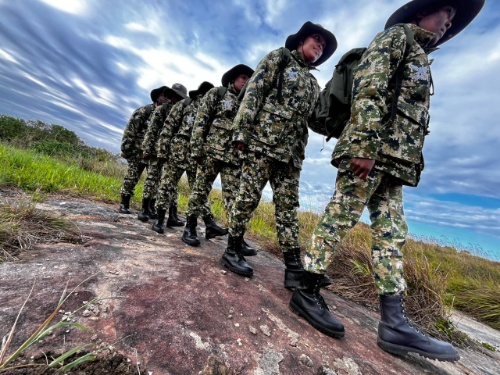
That camaraderie became especially visible during training. When some trainees developed shin splints and injuries from the physical demands of daily running and long-distance movement, others stepped in to help carry packs and slow their pace so nobody was left behind. “There was this real refusal to let anyone give up,” De Villiers says.
Training also pushed them far outside their comfort zones. Many of the women had never crossed rivers or worked in challenging terrain before. During one exercise, rising tides meant the team had to cross a river together, despite most not knowing how to swim.
“They linked arms, encouraged each other, sang songs, and crossed together,” he recalls. “When they got to the other side, they celebrated like they’d climbed Everest.”
Now officially deployed, their days begin early. Patrols start with morning parade, drills, and physical training before the team heads into the field. Some patrol fence lines or inland grasslands. Others monitor beaches and coastal areas. Alongside conservation work, they also assist with ecological monitoring and research projects underway in the reserve.
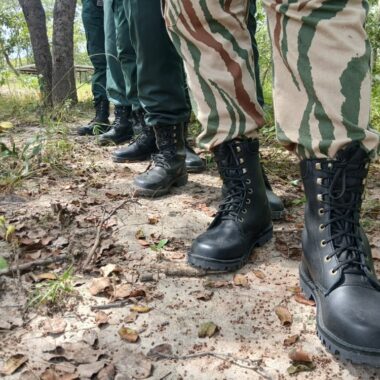
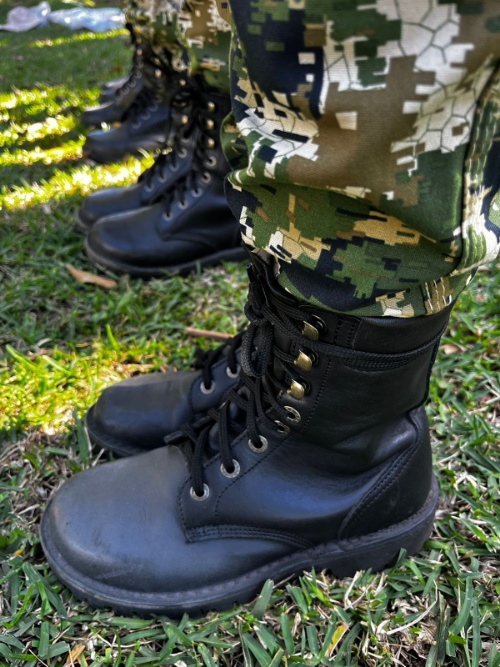
Much of their work is done on foot, though e-bikes help cover larger areas when possible. And in terrain like this, what’s on your feet matters. The Wild Coast is physically unforgiving. Grasslands, swamp forests, rocky shorelines, river crossings, and steep coastal sections all form part of a normal patrol route. “Good footwear is essential,” says De Villiers. “The importance of proper boots can’t be overstated.”
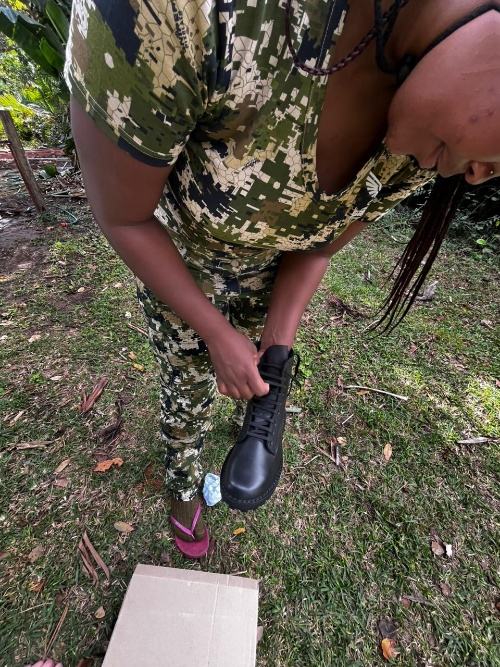
Before receiving support through the Boots for Rangers initiative, many trainees were wearing inexpensive footwear during physically demanding training. The impact showed quickly. “Two developed shin splints, one had knee issues,” he explains. “That could very well have been because the boots weren’t great.”
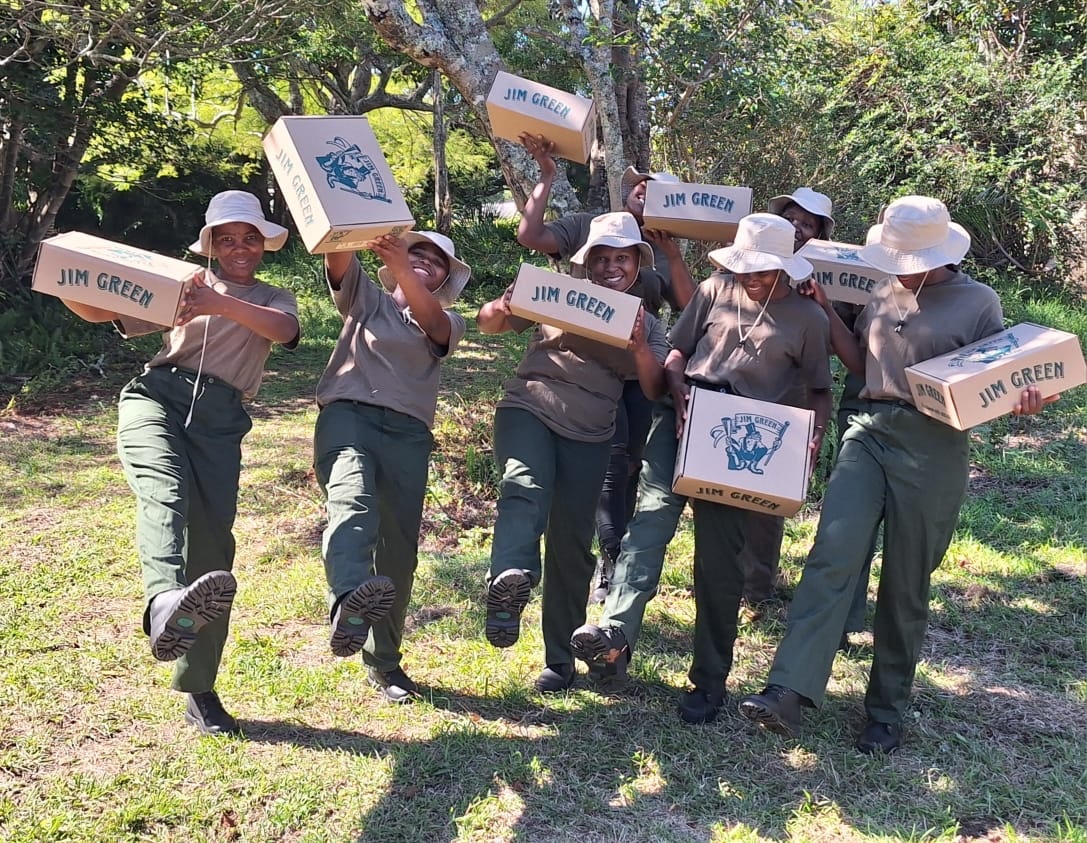
The arrival of Jim Green’s boots changed that almost immediately. “I must say, they were extremely excited,” he says. “You could see the joy.”
Looking ahead, De Villiers hopes the Green Griffons will continue to grow, eventually expanding from nine women to at least twelve and developing leadership roles within the team. “I’d love to see them reach the level of the Black Mambas,” he says.
For now, though, the focus is on learning the landscape, building confidence, and becoming a visible presence in one of South Africa’s most unique conservation spaces. On the Wild Coast, conservation doesn’t only happen through fences and enforcement. Sometimes it starts with nine women, learning to cross rivers together and finding their place in a landscape worth protecting.
Cheers,
The Jim Green Team
Through our Boots for Rangers initiative, run in partnership with the Game Rangers Association of Africa, we donate one pair of boots to a ranger for every ten pairs sold from our Ranger range. These boots support conservation teams at sites across Africa, with 8691 pairs already on the ground. As of 14/05/2026